
Getting Started in Gravhounds
From COSMO's job board to a living extract — the loop Octopus Panic actually showed.
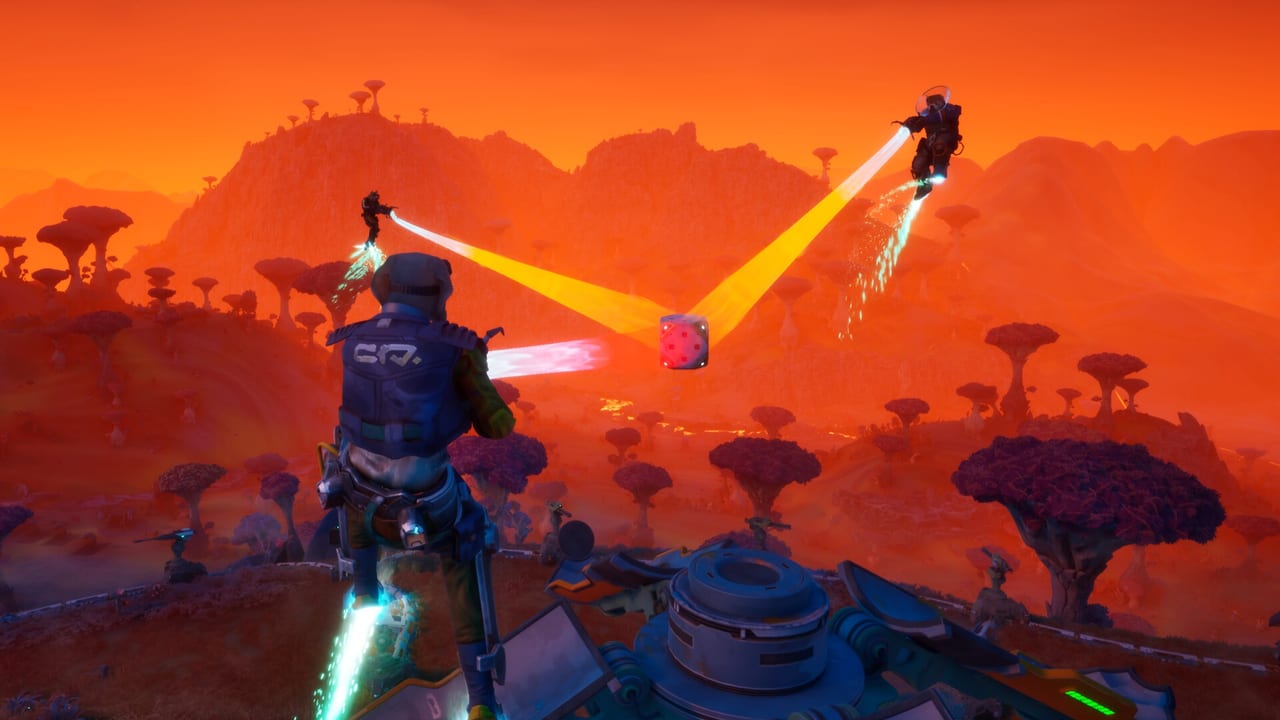
Gravhounds is a 1–4 player co-op action builder about showing up for work on the wrong side of the galaxy. You are a bio-engineered canine operator. Your shipboard AI, COSMO, still has jobs. Hostile planets still have materials. The swarm still wants you as kibble. This page is the first-shift briefing: what you do, in what order, and which wiki pages to open when a system gets its own rabbit hole.
The game enters Early Access / Game Preview on November 2, 2026 for Xbox Series X|S and PC, with day-one Game Pass planned. It is already described as fully playable solo or in co-op in the Steam Early Access FAQ, but you cannot buy a 1.0 disc today. Treat this guide as a systems primer, not a spoiler dump of unpublished planet names.
Before you drop
Wishlist or install from the platforms page. Check PC specs if you are on Windows. Steam lists full controller support; Octopus Panic veterans come from Halo and Battlefield, so a pad is a first-class citizen. Keyboard binds are not published as a final chart, so we will not invent WASD-plus-mystery-keys here. Expect: move, boost/hover, fire, Grav Beam, place/build, interact with the dropship and job board.
Each shift starts aboard the mining ship. The crew gathers, picks a job, and launches. Jobs shown in official copy include recovering alien technology, extracting valuable resources, and establishing infrastructure somewhere the local wildlife would prefer you did not. Higher-risk planets pay better materials. You can also terraform a planet between missions to tilt the odds — a pre-drop layer mentioned in launch coverage, not a full god-game.
Planet-side: the first ten minutes
Josh Holmes’ gamescom walkthrough is the cleanest order of operations:
- Land at the dropship. It is the center of the operation, not a cutscene prop.
- Lay pipeline. Pipeline is the power network that lets you expand across the planet. It is also a rail: your propulsion rig supercharges on the pipe and gives unlimited boost for rescues and last-second crate runs.
- Stand up a fabricator. Official language calls it a factory in a box. It produces Build Kits for the rest of your infrastructure. No kits, no turrets, no second generator, no clever corner.
- Place defenses and power. Turrets, generators, and more pipeline. Building is part of the fight, not a paused menu. Grab the kit with the Grav Beam, set it, power it, get back to work.
- Push the job. Gather, haul, shoot, and decide whether the next node is worth the extra heat.
The Grav Beam is on every hound. Use it to connect resources, fill defensive infrastructure, throw pickups to teammates, and manage wildlife. The Steam disclaimer is not a joke: volatile materials plus a beam is how Gravhounds become a highlight clip. Details live on the Grav Beam page so this primer can stay a checklist.
Mid-shift: you get weirder, so does the planet
As you fight, build, and contribute, Reward Pods drop randomized weapons and upgrades. You might lean mobility, firepower, defense, or a cursed mix. The swarm escalates on the same clock. A good shift ends with both sides more dangerous than they started. That is the roguelite layer: mid-shift stacking plus longer-term unlocks of Gravhounds, weapons, and upgrade paths between jobs. Failed extracts still feed meta progress, which is why dying on a greedy run is not a full wipe of your account.
Movement is industrial, not cover-shooter slow. Boost in multiple directions, jump, hover, then grind the pipe when the base is on fire in three places. Unauthorized recreational pipe-boosting is, according to the store page, strictly prohibited. Your pack will ignore that.
How a first pack should split work
Even if you queue solo, think in jobs:
- One hound watches power and turrets. Read How to build.
- One hound hauls and yeets. Read Grav Beam.
- One hound calls the extract. Read How to extract.
- The fourth (or your future self) peels wildlife and revives. Read co-op.
Pick a body from the crew roster. Dozer, Selene, and Finn already have named personality kits. You still share guns and building. The preview tier list is optional; the loop is not.
When to leave
The longer you stay, the greater the danger and the rewards. That sentence is on every official page because it is the game. A first-shift habit: set a mental “one more crate” limit before you land, then obey it unless the pipe is still green and the swarm is still a joke. Extraction is a bet, not a bonus chest. The dedicated extraction guide covers greed, pipeline collapse, and how a rescue turns into a wipe.
After the shift
Unlock paths, new hounds, and harder worlds are the between-job carrot. Early Access is expected to add missions, enemies, upgrades, and polish for roughly six months. Track that on Early Access. If you do not own the game yet, Game Pass and storefronts matter more than theory-crafting a perfect loadout.
You now know the shape of a shift. The rest of the Guides hub is how not to embarrass COSMO.
Frequently Asked Questions
Quick answers for Gravhounds players.
Can I play Gravhounds solo?
Yes. Steam lists single-player and online co-op. The loop is the same; the swarm is less chaotic without three other dogs.
What should I build first?
Pipeline from the dropship, then a fabricator so Build Kits exist. Details in How to build.
Is there a tutorial island?
Octopus Panic has not published a separate tutorial map name. The gamescom walkthrough treats the first job as the lesson. Use this page as the checklist.
Where do I pick my Gravhound?
From the five-hound crew. Kits differ; guns and building do not.